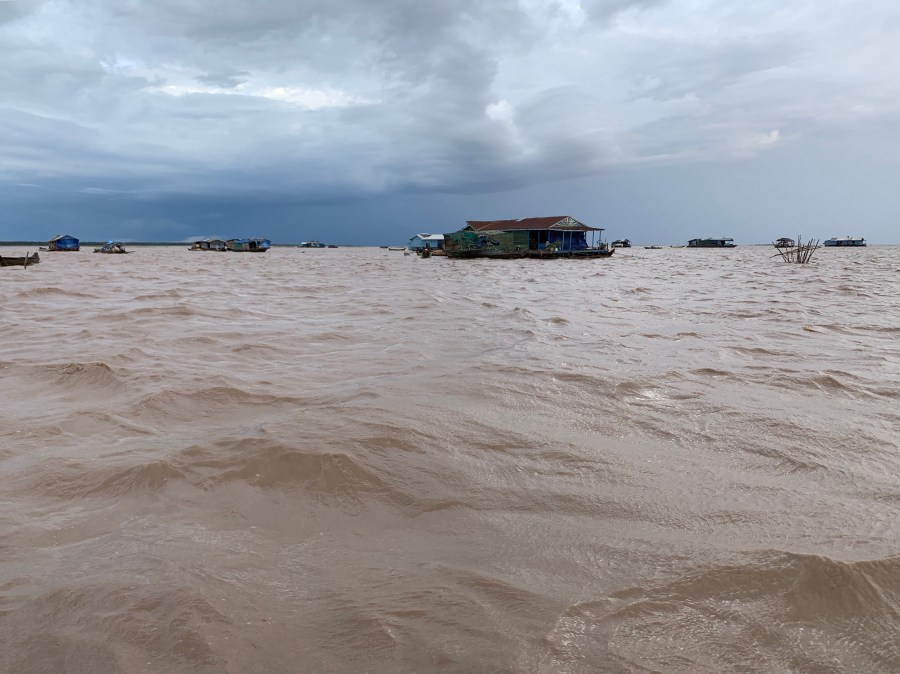
Tonle Sap is the largest lake in Southeast Asia and is home to a number of floating villages. Like much of Cambodian history, the events leading to the villages being formed here are not a happy tale.
People of Vietnamese descent in Cambodia were deported to Vietnam during the Khmer Rouge’s reign. Because of this, hundreds of thousands of people were displaced and their villages were destroyed. When these people returned to Cambodia after the fall of the Khmer Rouge in 1979, they often had no proof of Cambodian citizenship and were denied the right to own land.
These ethnically Vietnamese Cambodians found a workaround for this: they weren’t allowed to own land, but they were able to set up homes on the water.
There is still no way for these individuals to get a decent job or open a bank account, but thousands of people currently live on the lake and have set up fish farms to catch the fish that they eat and sell, enabling them to make some money.
Kompong Khleang
Kompong Khleang is one of a number of villages set up on the lake. It is the fourth closest to Siem Reap (about 50 kilometers away) and is the least hit by tourism.
In picking a tour to visit this village, I was very conscious of the impact that my visit might have on the community. Many of the tours that take you to the closer villages offer no financial benefit to the people living in those villages, and that was not something that was interesting to me. Instead, I found a tour run by a non-profit whose guides come from the village and whose proceeds are all donated to the Bridge of Life School, funding education, clean water, and other projects to support the people of Kompong Khleang.
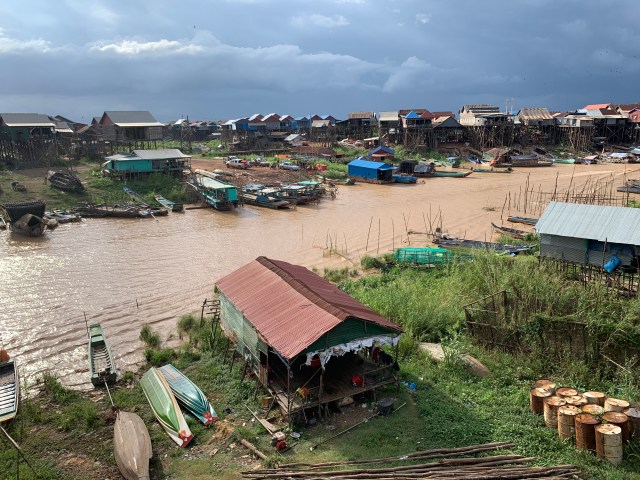
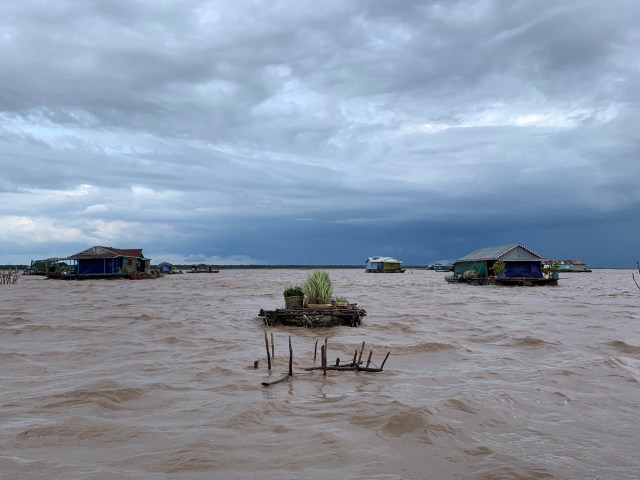
Kompong Khleang is home to about 14,000 people. Many of these live in the main community of stilted houses in the village center, but many more live in floating houses that are further out in the lake.
Every year in the dry season, the community in stilted houses have access to the land and to a road. They access their homes via ramps and steep staircases. However, when the rainy season comes and the lake swells, some of these homes flood and others are high enough that the water does not reach their floors. We visited right at the beginning of the rainy season, so the waters were only just beginning to rise.
Our visit
After a leisurely morning and lunch at the hospitality training restaurant Spoons, Caitlin and I were picked up from our hotel at 2pm on Thursday to begin our Kompong Khleang tour. Our van stopped to pick up 7 other people, and then we were off toward Tonle Sap lake.
The man leading our tour was originally from Kompong Khleang, and was wonderful in his explanations of what we’d be seeing. He seemed sincerely grateful that we’d picked this tour and were giving back to his community.
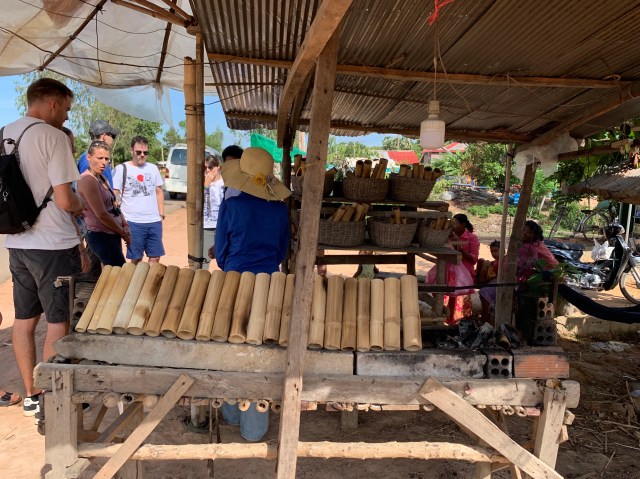
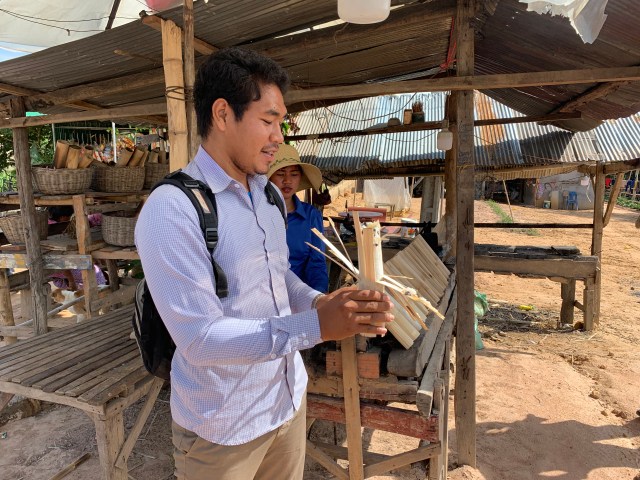
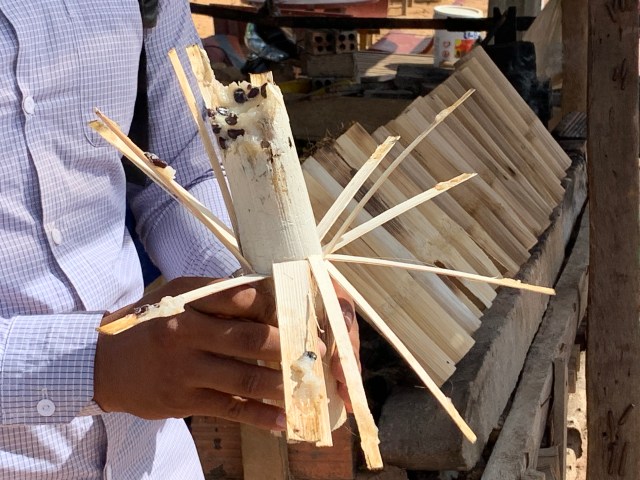
During the drive to the lake, we made a couple of stops. The first was at a stand by the side of the road for Khmer bamboo sticky rice. Our guide showed us how to peel open the roasted bamboo to get at the sticky rice and black beans inside, and then he gave us each one to enjoy.
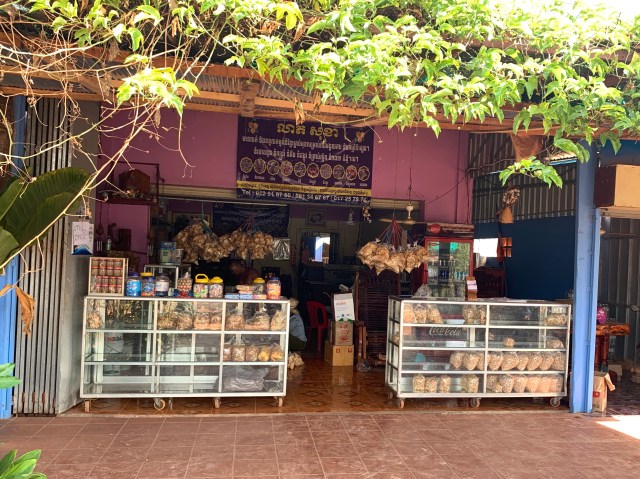
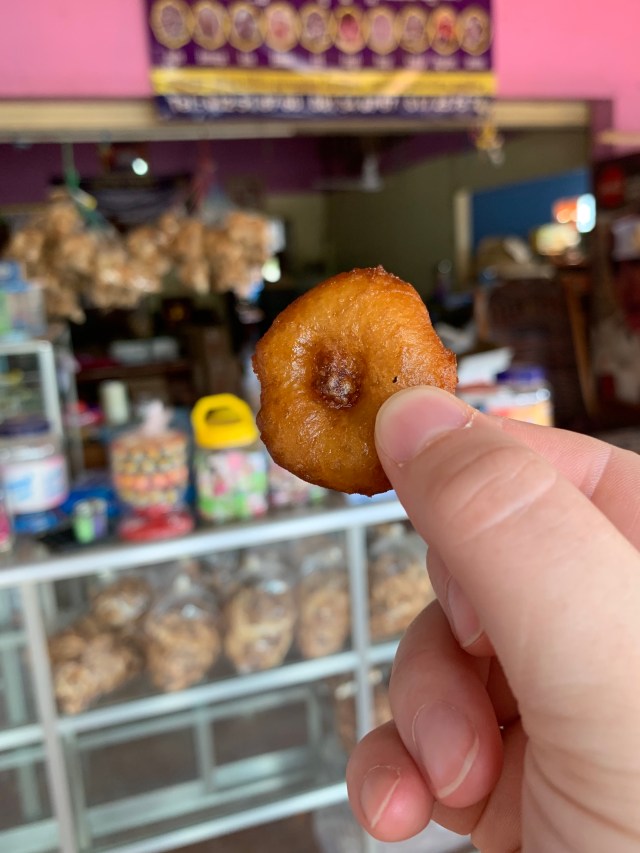
Our next stop was at a local bakery where we tried handmade palm sugar donuts, sesame cones, and worm cookies (don’t worry – they only looked like worms). Everything we tried was absolutely delicious, and we brought some bags of these treats with us to snack on in the car.
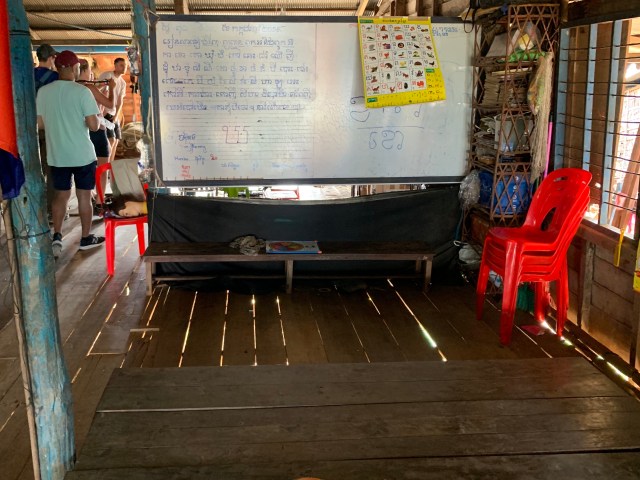
Finally, we made it to the village. We started our visit by going into a primary school on stilts that the Bridge of Life organization had built. Here, our guide told us about some of the initiatives of this non-profit, including building more schools, starting sewing and computer classes for adults, cleaning plastic from the lake, and supplying clean drinking water to the community.
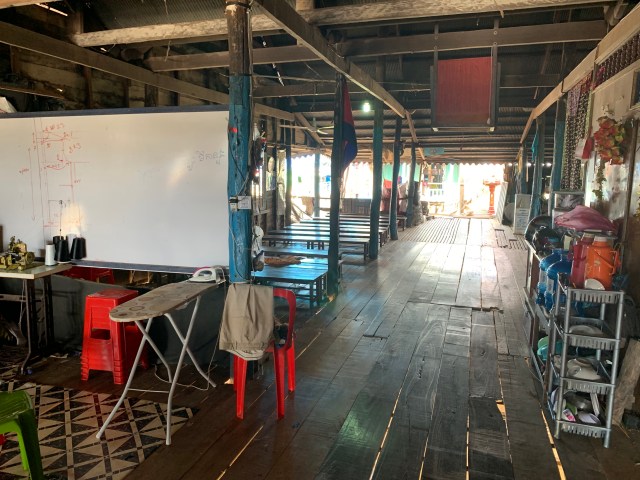
After we spent a little time walking through the stilted village center, we boarded a boat and began our tour of the broader village.
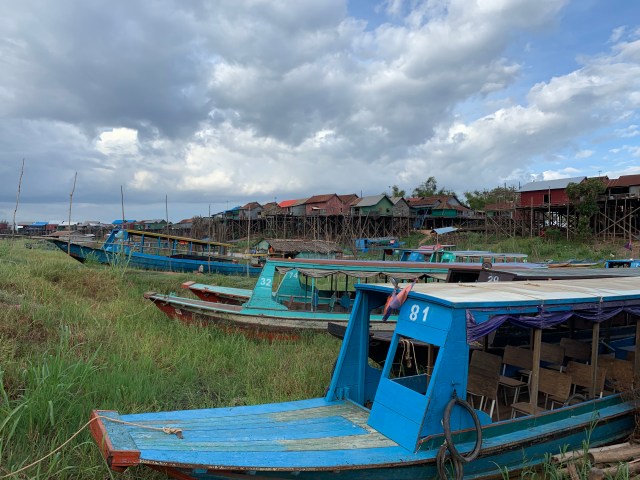
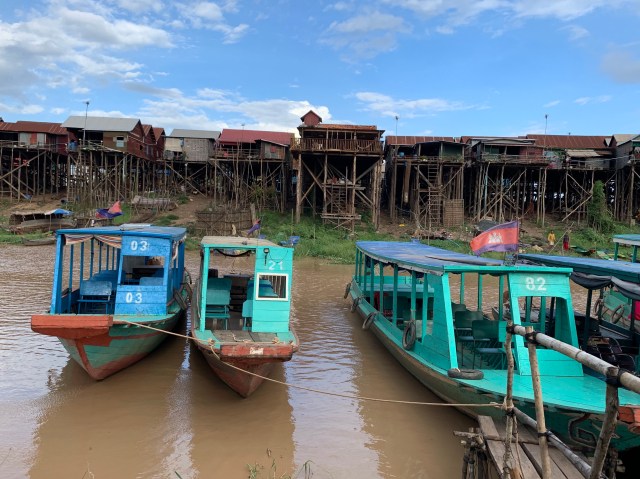
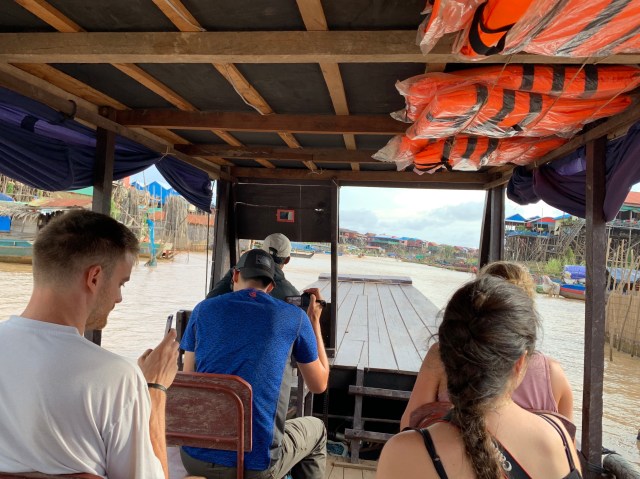
Most of the houses were clustered together, though during our ride towards the center of the lake we passed by a number of smaller communities of floating homes, schools, and community centers.
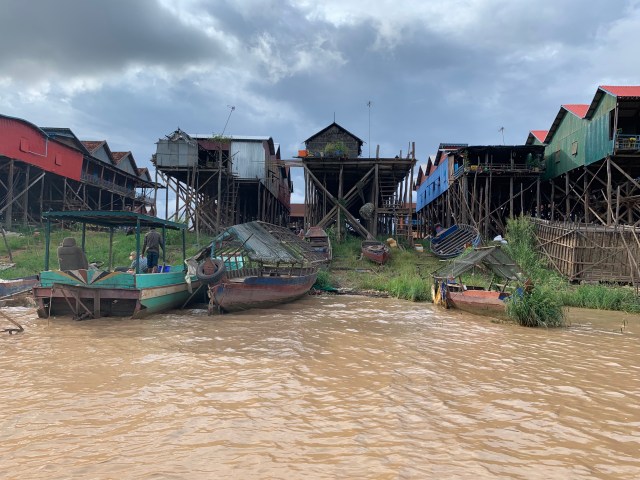
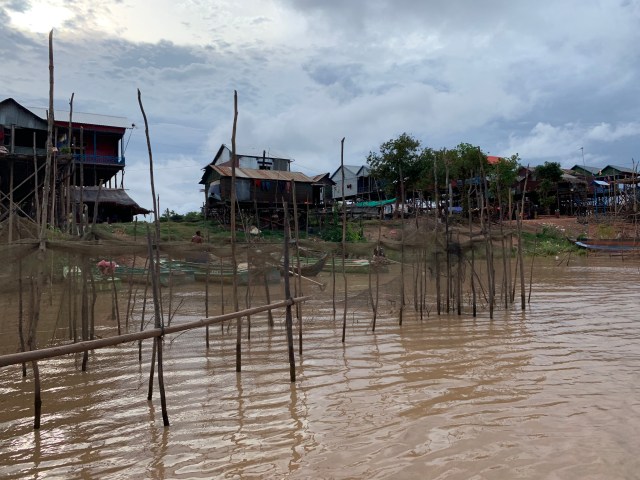
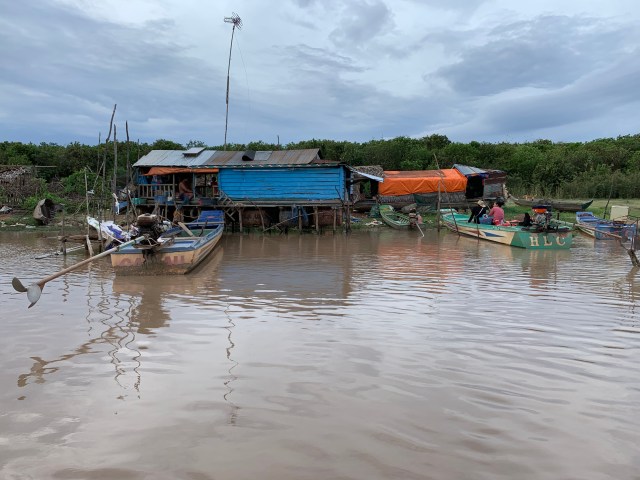
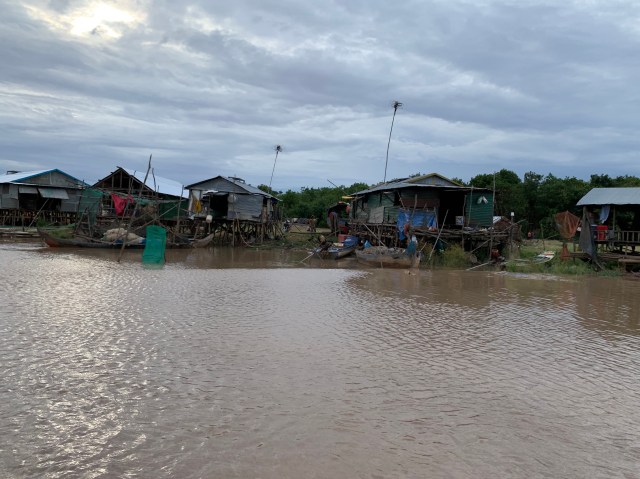
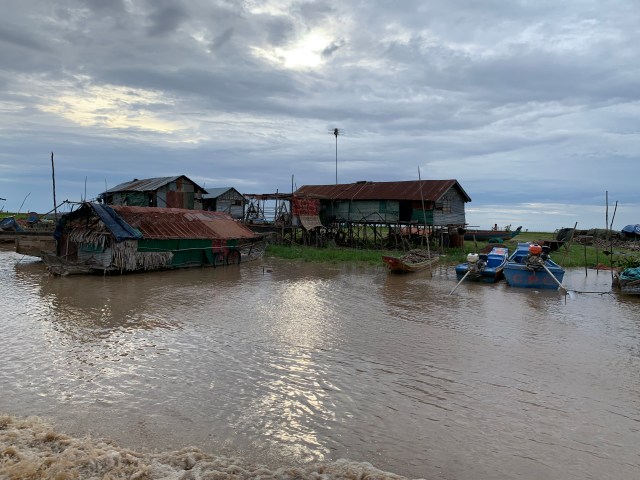
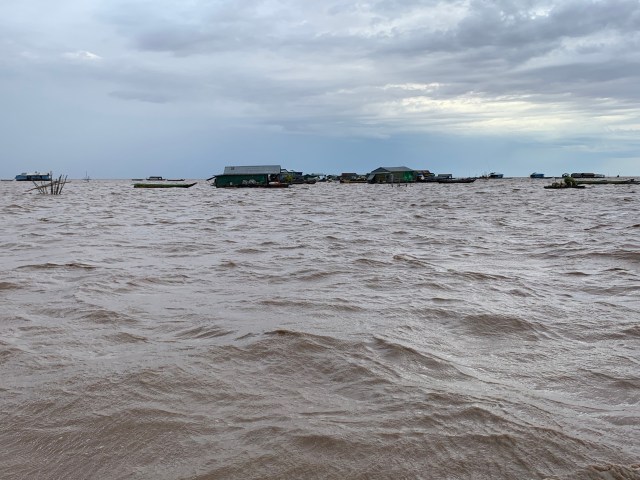
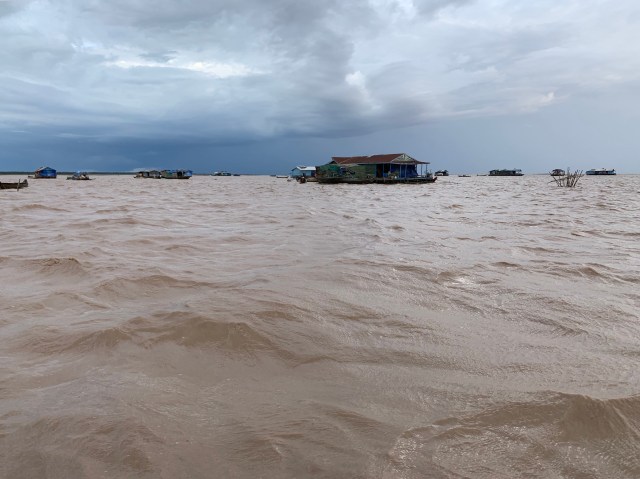
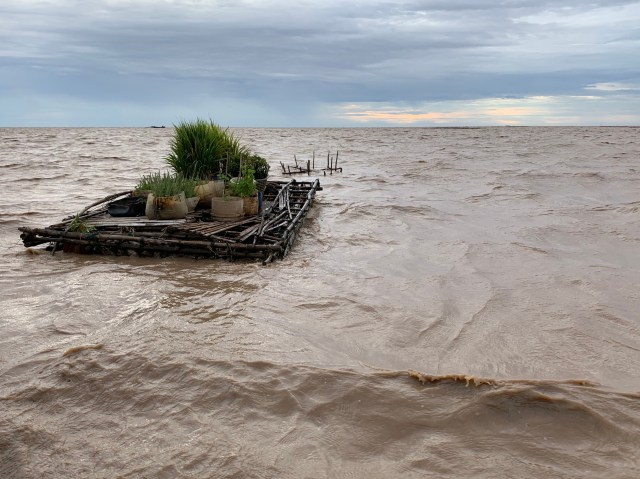
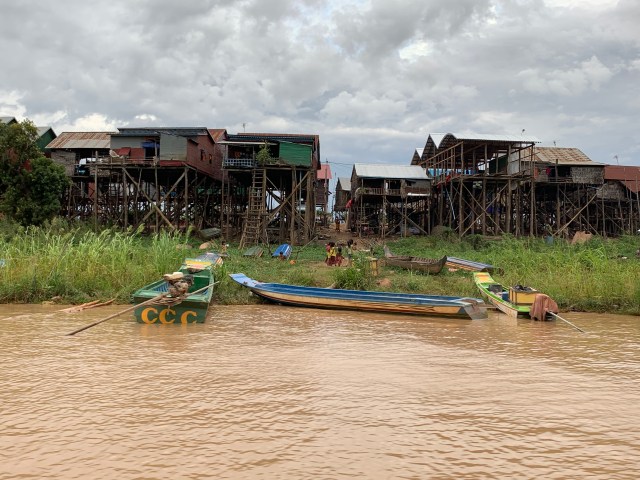
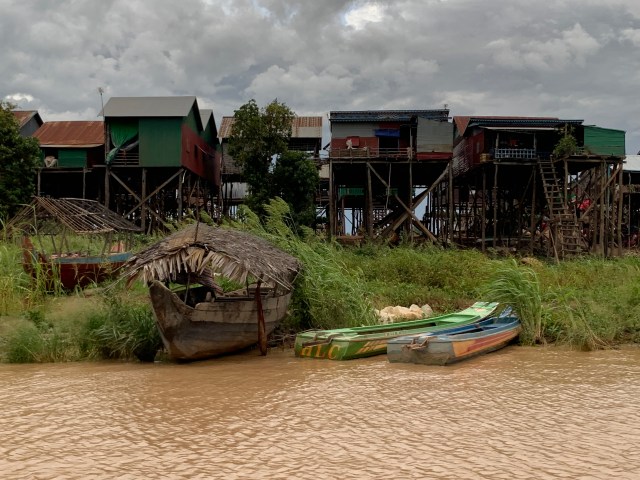
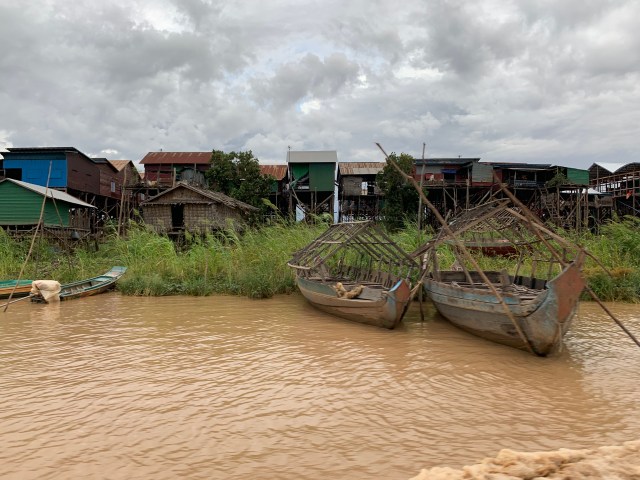
I saw children playing (they often stopped to wave at our boat as we passed), women chopping up fresh fish, and men repairing their boats.
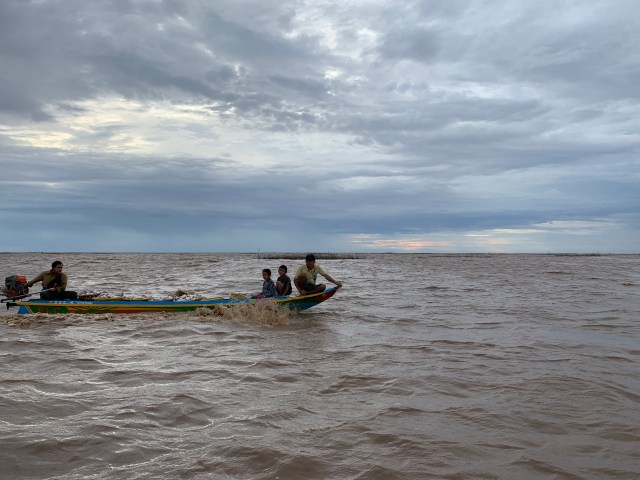
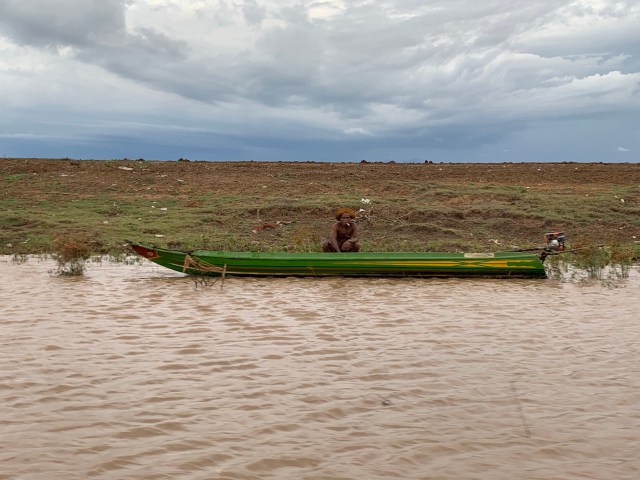
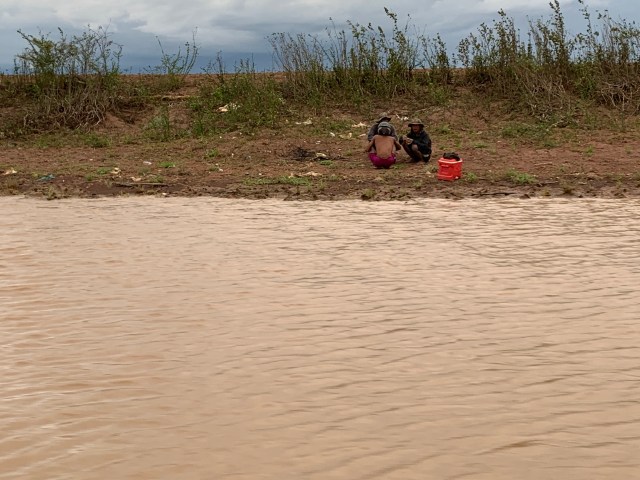
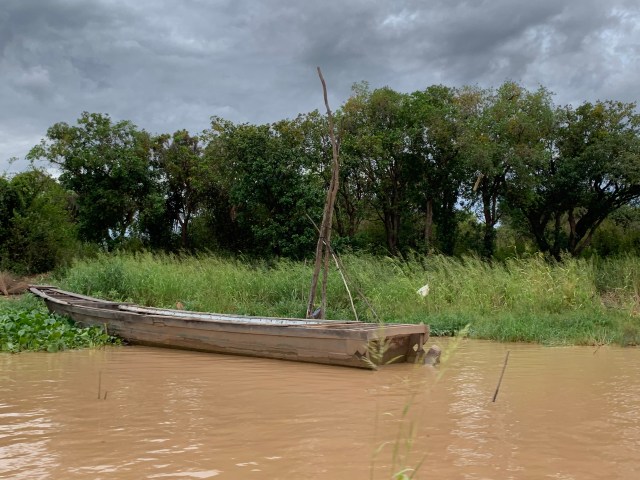
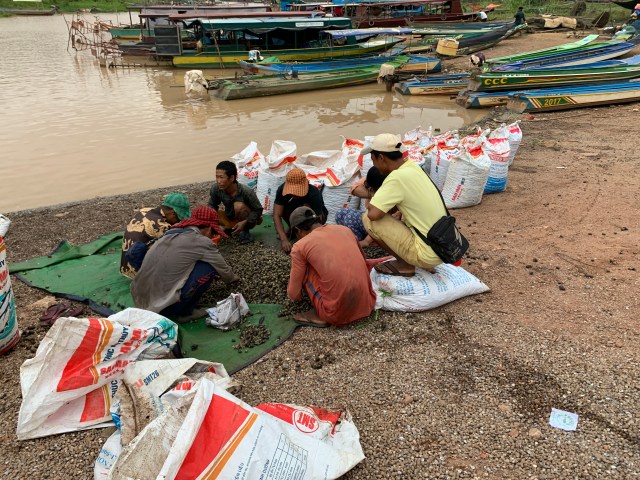
We also saw the fish farms. Endless nets were set up throughout the lake, held up by sticks stuck into the ground. We passed by individuals working hard in preparation for the lake to rise, and people catching fish, clams, and shrimp.
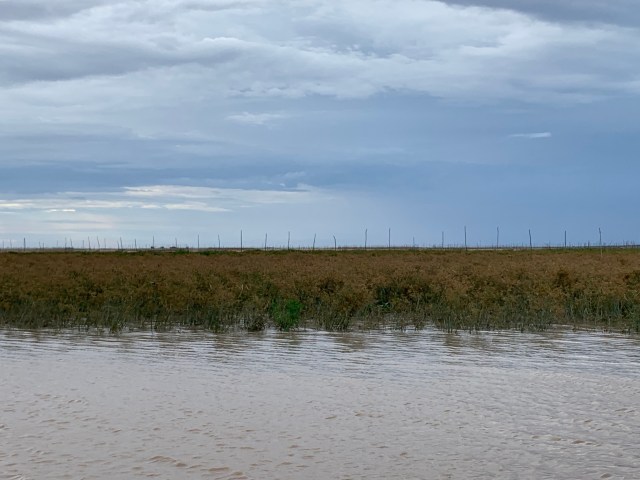
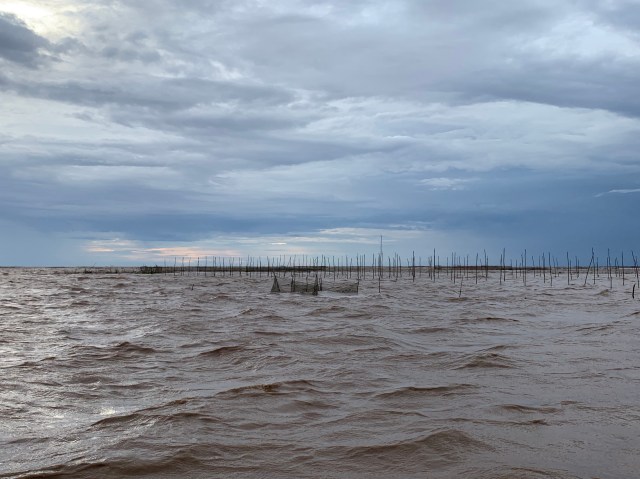
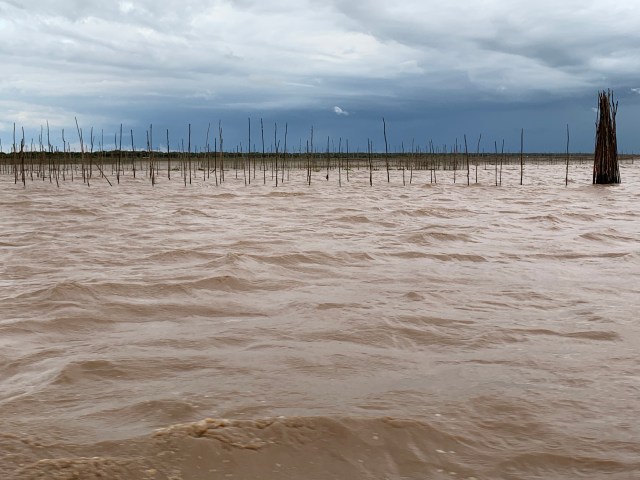
This was such a fascinating experience. As much as I had read about this village in advance, it was so different to see it in person. I am very grateful that I was able to tour this community.
 Journeying Jasmine
What an interesting place and experience. Your photographs really convey the feel of the village. What difficult lives people have. Can’t believe you have been traveling for 5 weeks already!
Safe travels home.
LikeLike
It was really fascinating to see. The organization that I toured with had one very reasonable request – that we do not photograph the local children – which is why all the views are from a distance. I’m glad you were still able to understand the feel of the village, though!
I made it home safely last night. Thanks! ❤
LikeLike